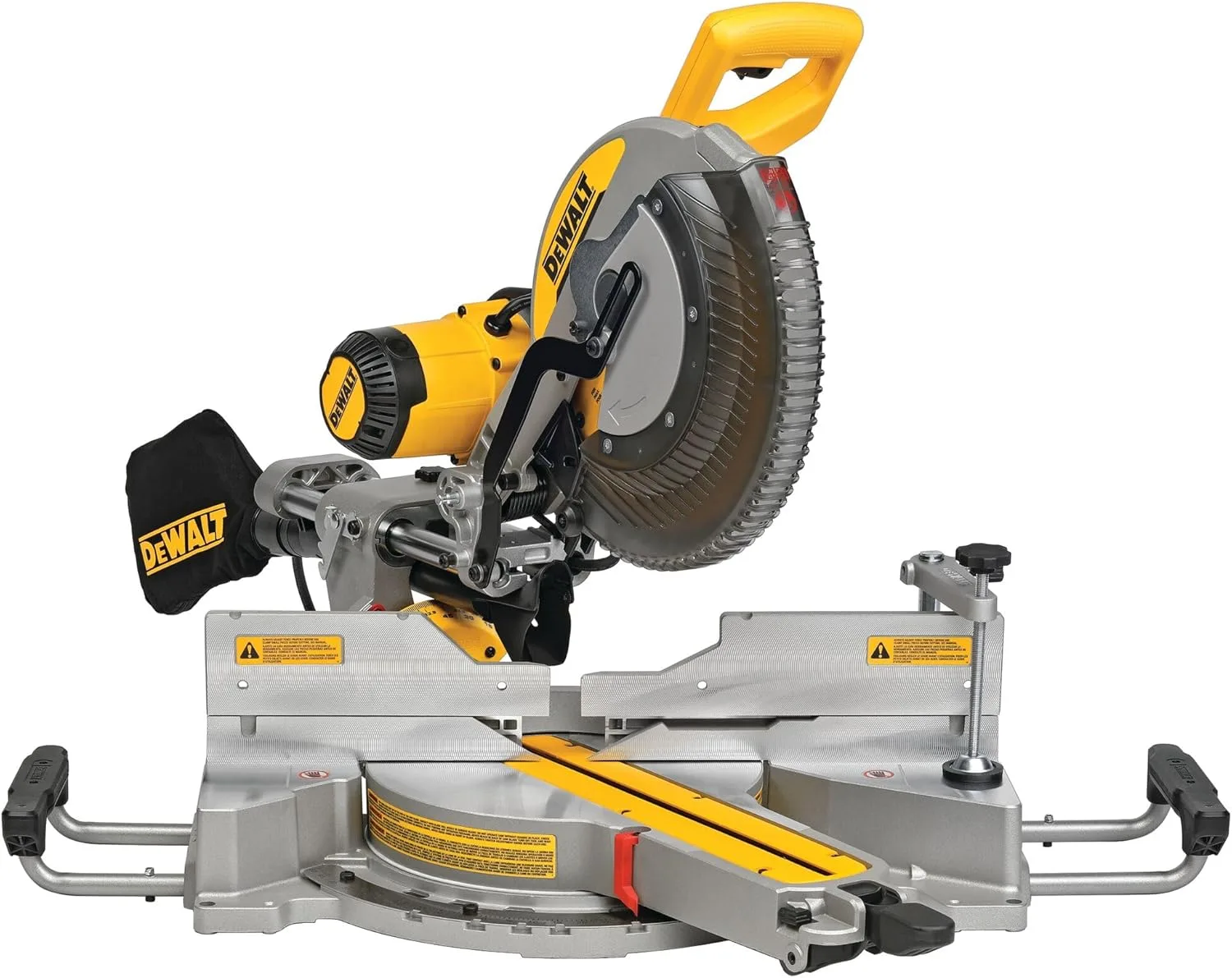
If you’ve spent any time looking at miter saws, you’ve probably run into the DeWalt DWS780 about a dozen times. It shows up at the top of nearly every “best miter saw” list on the internet — and after putting it through its paces on real cabinet and trim work, I can tell you it’s on the top of the every list for a reason. But there’s one weakness almost nobody talks about, and depending on how you use it, it might actually matter to you.
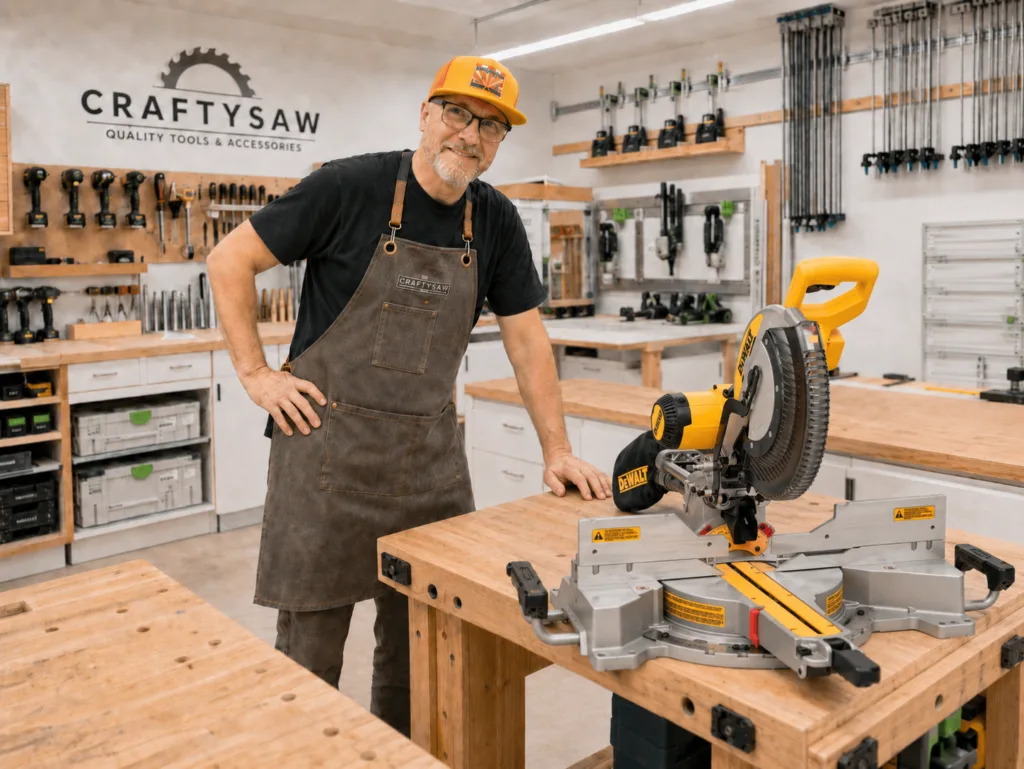
I’m Mark, and I’ve been in construction and woodworking for over 25 years. I’ve owned cheaper saws, borrowed better ones, and made a lot of mistakes figuring out what actually matters in a shop tool. The DWS780 is the saw I keep coming back to — with one modification I’ll show you at the end of this review.
Quick Summary
- Product: DeWalt DWS780 12-Inch Double Bevel Sliding Compound Miter Saw
- Rating: ⭐⭐⭐⭐⭐ 4.7 / 5
- Price Range: Around $499–$549 (check current price below)
- Best For: Cabinet makers, trim carpenters, serious DIYers
- Bottom Line: The best corded 12″ miter saw you can buy — just plan for a dust collection upgrade
DeWalt DWS780 Quick Verdict
The DWS780 is accurate, powerful, and surprisingly easy to use straight out of the box. The XPS shadow line system is genuinely the best blade alignment feature I’ve used on any miter saw — no laser drift, no recalibration, just a clean, sharp shadow that tells you exactly where the blade is going. At around $499–$549, it’s not cheap, but it is priced fairly for what you’re getting.
The only one legitimate gripe is usually about dust collection. DeWalt claims 75% capture, and while that’s technically achievable with a good shop vac, the stock port setup has a frustrating gap that lets a lot of fine dust escape. It’s fixable — there are great third-party solutions — but you should know about it before you buy.
✅ Pros
- XPS shadow line is best-in-class accuracy
- Arrives perfectly calibrated out of the box
- Cuts 2×14 lumber at 90° — huge capacity
- Lighter than the Bosch at 56 lbs — easier to move
- Dual bevel — no flipping boards for compound cuts
- 10 positive miter stops — fast, repeatable angles
- Perforated blade guard — see your cut without removing the guard
- Compatible with a huge range of 12″ blades
❌ Cons
- Dust collection port has a gap — needs an upgrade
- No stand included — budget another $100–$150
- Heavy at 56 lbs — not a “throw it in the truck” saw
- Needs significant clearance behind the saw (~18″)
- 12″ blades cost more than 10″ alternatives
Why I Tested the DeWalt DWS780
My old 10-inch compound saw served me well for years on basic crosscuts and simple trim work. But once I started taking on more detailed cabinet work — crown molding, wide baseboards, compound angles — I kept hitting its limits. I needed something with more cutting capacity, a better alignment system, and the kind of accuracy you can trust when you’re making a dozen identical cuts in a row.
I also wanted a saw I could actually recommend to readers without hesitation. There are a lot of “best miter saw” articles out there that basically say every saw they mention is perfect. That’s not useful. So I ran the DWS780 through a full kitchen cabinet job and several months of trim work before writing this — here’s what I found.
Overview of the DeWalt DWS780
Key Features
- XPS LED cross-cut positioning system (shadow line, not a laser)
- 15-amp, 3,800 RPM motor
- 12-inch dual bevel sliding compound design
- Cuts a 2×14 at 90°, a 2×10 at 45°
- Miters 60° right / 50° left
- Bevel range: 0–49° left and right with positive stops
- 10 miter positive stops on adjustable stainless steel detent plate
- Tall sliding fences for crown molding up to 7-1/2″ nested
- Perforated blade guard for improved visibility
- Cam lock miter handle with detent override
Technical Specs
| Specification | Detail |
|---|---|
| Blade Size | 12 inches |
| Motor | 15 Amp / 3,800 RPM |
| Weight | 56 lbs |
| Miter Range | 60° right / 50° left |
| Bevel Range | 0–49° left and right |
| Max Cut at 90° | 2×14 dimensional lumber |
| Max Cut at 45° | 2×10 dimensional lumber |
| Positive Miter Stops | 10 |
| Alignment System | XPS LED Shadow Line |
| Power Source | Corded (120V) |
| Manufactured In | United States |
| What’s Included | Blade, dust bag, blade wrench, vertical material clamp |
My Hands-On Experience
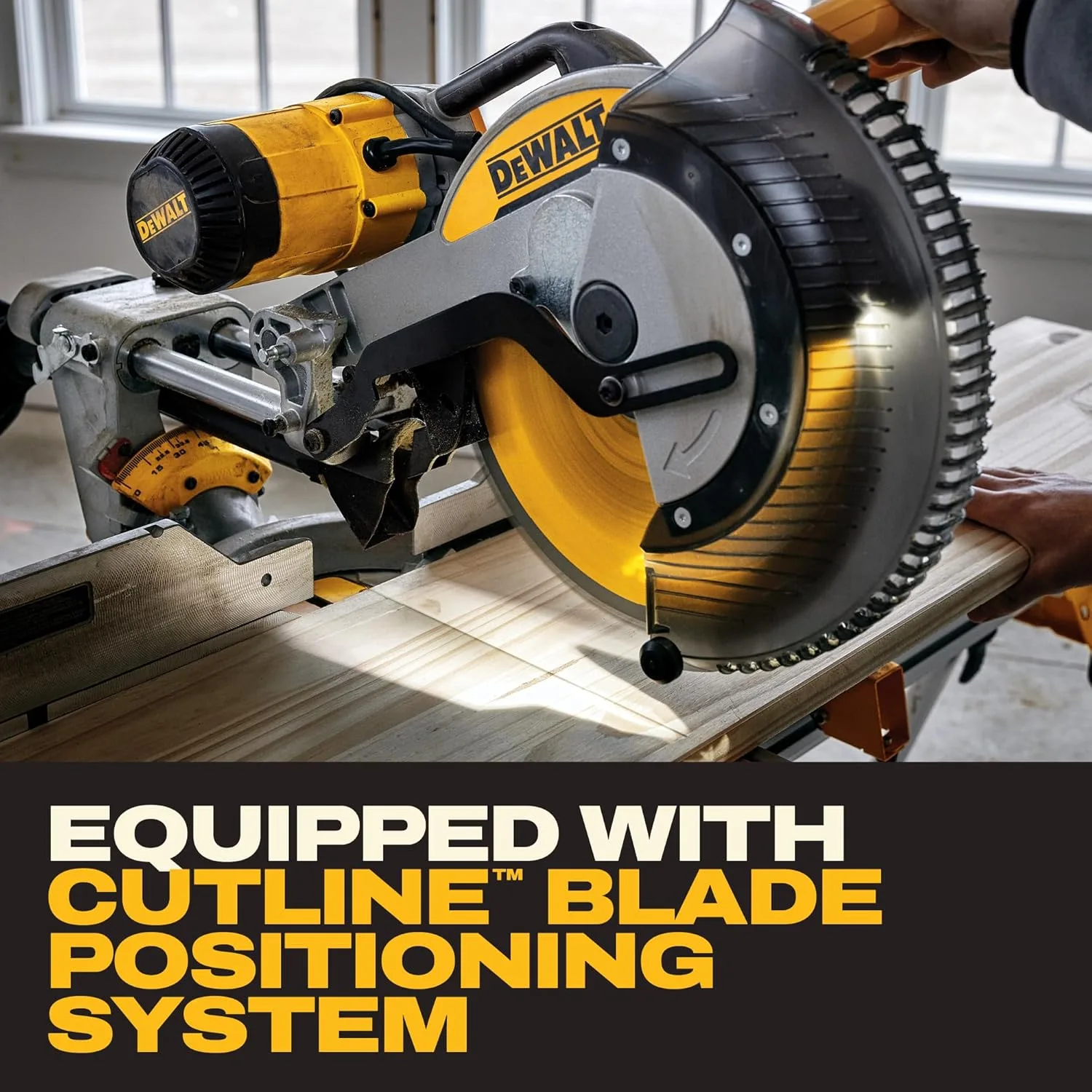
The first time I lined up a cut with their XPS system, I actually laughed. It sounds dramatic, but after years of fighting with laser guides that drift, need recalibration, or just aren’t bright enough to see in daylight — the shadow line is a revelation. The LED projects a crisp, razor-sharp shadow of the blade kerf onto your workpiece. You can see exactly where the cut will land, even in a bright shop, and it stays accurate no matter what blade you swap in. No batteries to replace, no recalibration after blade changes.
On a high-end remodel job, I made somewhere around 200 crown molding cuts without once second-guessing my alignment (crown ran throughout the entire home at the high ceilings). That saved me dozens of trips up/down a ladder.
Power and Cutting Performance
The 15-amp, 3,800 RPM motor handles everything you’re likely to throw at it. I ran it through 4×4 pressure-treated posts, hard maple at full depth, and thick MDF without a hint of bogging down. Honestly, power never entered my mind during the whole job — which is exactly what you want from a shop tool. The saw, just, cuts.
The sliding arm design gives you a huge 2×14 crosscut capacity at 90 degrees — meaningfully more than most 10-inch saws. For anyone working with wide boards, rough-sawn timber, or built-up crown molding stock, that extra capacity matters. And believe me with today’s tall base boards this ability is a MUST have.
Accuracy and Repeatability
This is where the DWS780 genuinely earns its reputation. Mine arrived square out of the box — both the miter table and the bevel were spot-on without any adjustment. The miter detent system clicks into position with satisfying firmness, and settings don’t drift during heavy use. The cam-lock handle lets you lock in a custom angle quickly, and the stainless steel detent plate holds up to years of repeated use without wearing loose.
For cabinet work — where you’re cutting the same angle 30 times in a row and every joint has to close perfectly — this kind of consistent accuracy is non-negotiable. The DWS780 delivered it every time.
The Dust Collection Problem
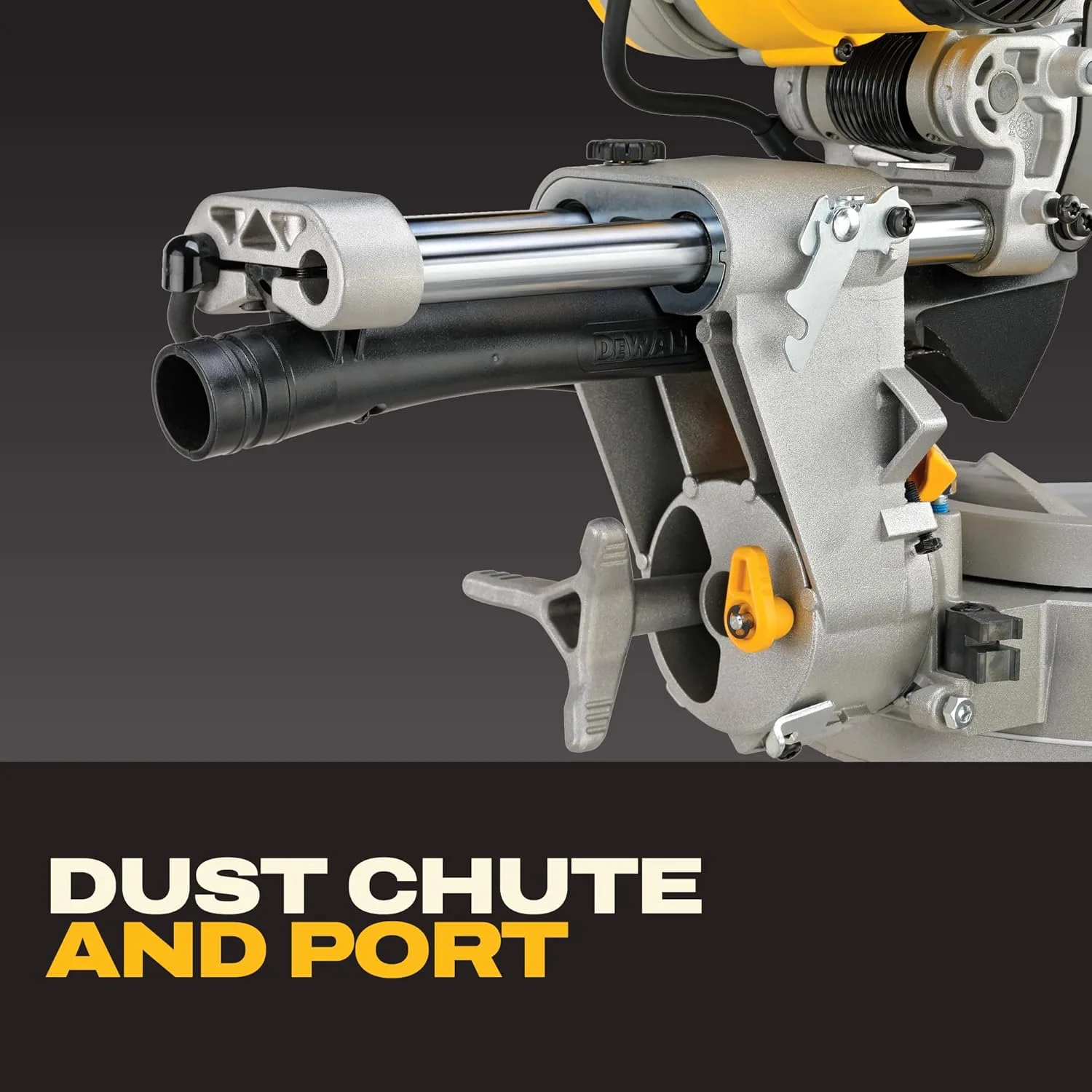
Let me be direct about this because a lot of reviews gloss over it: the stock dust collection setup on the DWS780 is its biggest weakness, and it’s a known issue with a community of DIY fixes behind it.
The dust port is designed for a 1-5/8 inch hose. The problem is a noticeable gap between the port and wherever your vacuum hose connects, which lets a meaningful amount of fine dust escape sideways rather than getting collected. With just the included dust bag, you’ll be sweeping constantly. Hooked up to a decent shop vac it gets significantly better, but even then, fine particles escape around the edges of the cutting area.
The fix? There are 3D-printed dust shroud upgrades and aftermarket throat plates designed specifically for the DWS779/780 that dramatically improve collection — some users report going from mediocre to 90%+ capture with a good aftermarket shroud and a strong shop vac. I’d budget an extra $30–$60 for this upgrade and consider it part of the purchase.
Build Quality and Ergonomics
The magnesium upper components and steel base give the DWS780 a solid, planted feel on the bench without making it absurdly heavy. At 56 pounds it’s not a “throw it in the truck every day” saw, but it’s manageable to move around the shop or load into a vehicle for jobsite work. DeWalt also included a carrying handle and the ability to lock the sliding arm in the down position for transport — small details that show real-world thinking.
The perforated blade guard is a genuinely clever design touch. Most woodworkers I know remove blade guards because they block sight lines. With the DWS780 you don’t need to — the perforations let you see the blade and the XPS shadow line clearly while the guard is in place. Much safer and more accurate.
How the DWS780 Compares to Alternative Miter Saws
| Product | Price | Blade | Best For |
|---|---|---|---|
| DeWalt DWS780 | ~$499–$549 | 12″ | Best all-around accuracy & capacity |
| Bosch GCM12SD | ~$600–$650 | 12″ | Best precision, smaller footprint |
| Milwaukee M18 FUEL 2734 | ~$649 kit | 10″ | Best cordless option |
| Skil MS6305-00 | ~$200–$250 | 10″ | Best budget pick |
| Metabo HPT C10FCGS | ~$170–$200 | 10″ | Best entry-level corded saw |
DWS780 vs Bosch GCM12SD: This is the most common comparison, and it’s close. The Bosch has a space-saving axial glide system (no rear clearance needed), micro-adjustable miter detents, and slightly better precision for fine furniture work. The DeWalt is lighter, less expensive, and has a larger cutting capacity. For most woodworkers, the DeWalt wins on value. If you’re doing production cabinetry and space is tight, look hard at the Bosch.
DWS780 vs Milwaukee M18 FUEL: The Milwaukee cordless miter saw is excellent if you’re already in the M18 ecosystem and need to cut without a cord. But the DWS780 is more powerful, has better cutting capacity, and is meaningfully cheaper. Unless cordless is a genuine requirement for you, the DeWalt is the stronger tool for shop use.
Pros and Cons (Expanded)
Pros
- XPS shadow line system — The single best alignment feature on any miter saw at this price. Accurate, durable, and requires no maintenance or recalibration
- Arrives calibrated — Most saws need squaring up before first use. The DWS780 was dead-on straight right out of the box
- Huge cutting capacity — 2×14 at 90° handles almost anything you’ll ever cut in a real shop
- Solid positive stops — 10 miter stops that hold firm under repeated use
- Dual bevel — Bevel both left and right without flipping your workpiece. Essential for crown molding and compound cuts
- Perforated blade guard — See your cut line without removing the guard. Safer and smarter
- Tall sliding fences — Support crown molding up to 7-1/2″ nested; fences slide out of the way for bevel cuts
- Strong aftermarket support — Years of blades, stands, and accessories designed specifically for this saw
Cons
- Dust collection needs an upgrade — The stock port works better with a shop vac than with the included bag, but there’s a gap issue that lets fine dust escape. Budget for a third-party shroud
- No stand included — For a $500+ saw, including at least a basic stand would be a nice touch. You’ll want a rolling stand for shop use — add $100–$150 to your budget
- Rear clearance requirement — The sliding arm needs about 18 inches of clear space behind the saw. This catches people off guard when mounting it on a bench against a wall
- 12″ blades are pricier — More blade selection than smaller saws, but good quality 12″ blades cost more than 10″ equivalents
Check the DeWalt DWS780 Price on Amazon →
Final Verdict
If you’re serious about woodworking — cabinets, trim, furniture, or production work — the DeWalt DWS780 is the corded miter saw I’d recommend without hesitation. The XPS alignment system alone puts it ahead of everything at this price point, and the combination of cutting capacity, accuracy, and build quality is hard to beat for under $550.
The dust collection issue is real, but it’s solvable. Treat the aftermarket dust shroud upgrade as part of the purchase — not an optional extra — and you’ll have an outstanding setup that will last years in a serious shop.
If you’re a casual weekender who only cuts a few boards a month, the Metabo HPT C10FCGS at $170 will do the job. But if you’re building anything that demands repeatable precision, the DWS780 is in a different league.
Rating: 4.7 / 5 ⭐⭐⭐⭐⭐
The best corded 12″ miter saw for woodworkers — plan for a dust collection upgrade
Build out your cutting setup: Pair the DWS780 with a hybrid table saw for ripping, a track saw for sheet goods, and make sure you have the right woodworking safety gear before you cut.
Budget alternative: If the DWS780 price is a stretch, see our review of the best budget track saw for sheet goods cutting on a tighter budget.
FAQs About the DeWalt DWS780
Is the DWS780 worth it for a beginner?
It depends on what you’re building. For a true beginner doing occasional small projects, the DWS780 is probably more saw than you need right now — a 10-inch compound miter saw at half the price will serve you well while you’re learning. But if you’re jumping into cabinet building or serious trim work from the start, the DWS780 gives you a tool you won’t outgrow.
What’s the difference between the DWS779 and the DWS780?
The DWS780 adds the XPS LED shadow line system that the DWS779 lacks. Everything else is essentially the same — same motor, same cutting capacity, same build. The XPS system alone is worth the price difference for most woodworkers. If you can find the DWS779 at a steep discount, it’s a capable saw, but the shadow line on the DWS780 is the feature that makes this tool special.
Do I need a special stand for the DWS780?
No specific stand is required, but you’ll want one. The Ridgid miter saw stand is a popular pairing — it’s heavy-duty, rolls easily, and has good material support arms. Budget around $100–$150. Just remember the saw needs about 18 inches of clearance behind it for the sliding arm, so plan your stand placement accordingly.
How do I fix the dust collection on the DWS780?
The most effective fix is a third-party dust shroud designed specifically for the DWS779/780. Several sellers on Etsy and Amazon make 3D-printed shrouds that replace the stock collection setup and dramatically improve efficiency when paired with a shop vac. Search for “DWS780 dust collection upgrade” and you’ll find several options in the $20–$50 range. Combined with a good shop vac, you can realistically capture 85–90% of the dust produced.
Can the DWS780 cut 4×4 lumber?
Yes, comfortably. The 15-amp motor and 12-inch blade handle 4×4 pressure-treated posts without straining. The cutting depth at 90 degrees is more than sufficient for standard dimensional lumber up to 4×4 in a single pass.
Is the DWS780 made in the USA?
Yes — DeWalt manufactures the DWS780 in the United States, which is worth knowing if that matters to your purchasing decisions.
CraftySaw uses affiliate links, so if you purchase a product or service via an affiliate link I will receive a referral fee (at no cost to you). All opinions are my own based on hands-on testing and real-world use.