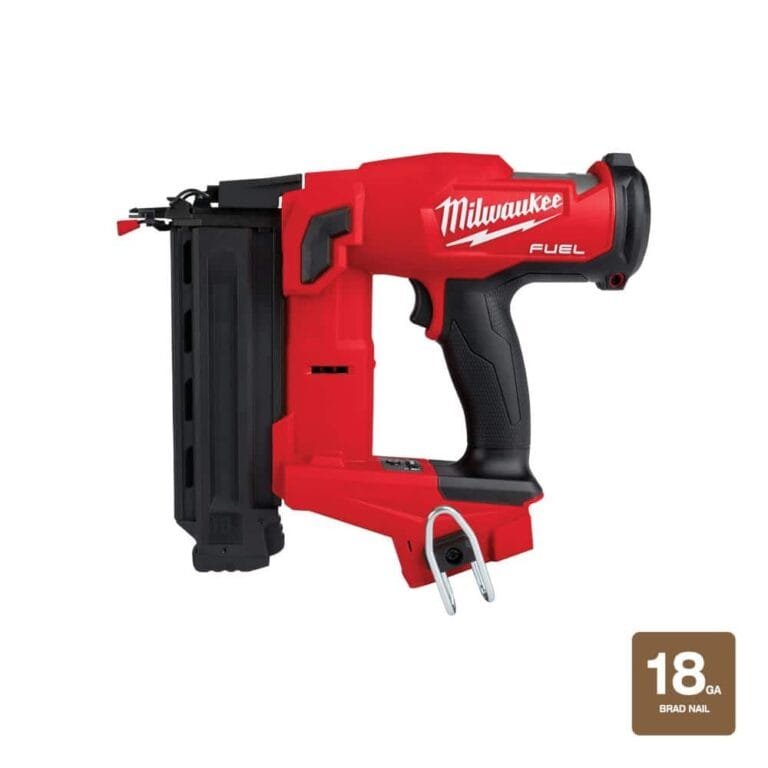
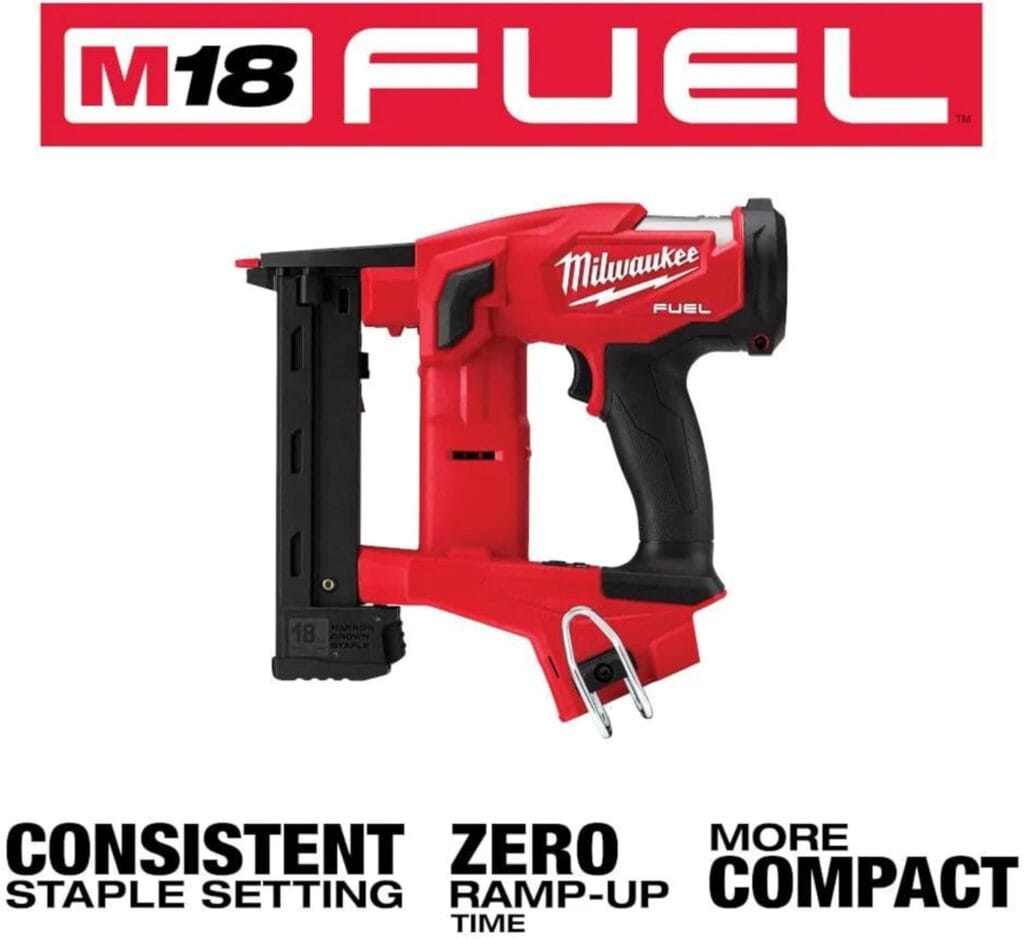
Milwaukee M18 FUEL 18GA 1/4″ Narrow Crown Stapler — Quick Summary
The Milwaukee 2749-20 is the best cordless narrow crown stapler I’ve used. It fires like a pneumatic, handles cabinet backs and underlayment without complaint, and the battery runtime is genuinely impressive. The price is steep, but if you’re already in the M18 ecosystem, it’s hard to argue with.
- Product: Milwaukee M18 FUEL 18GA 1/4″ Narrow Crown Stapler (2749-20)
- Rating: 4.6 / 5
- Price Range: ~$209–$279 (bare tool)
Milwaukee M18 FUEL Stapler — Quick Verdict
I’ll be honest with you: I resisted buying this tool for a long time. I’ve had a perfectly functional pneumatic stapler for years and wasn’t sure I needed to spend $279 to replace it. But after dragging an air hose through a cramped attic knee wall on a built-in cabinet install last spring, I finally pulled the trigger.
Best tool decision I’ve made in years. The nitrogen air spring mechanism means there’s zero ramp-up time—you pull the trigger and it fires, instantly, every time. For anyone doing cabinet backs, face frame assembly, flooring underlayment, or aluminum soffit work, this thing genuinely replaces the compressor. Not “close enough to replace it”—actually replaces it.
✓ Pros
- Zero ramp-up time — fires instantly like a pneumatic
- Excellent battery life (2,000+ staples on a 2Ah pack)
- Tool-free depth adjustment works reliably
- Sequential and contact-fire modes
- Compact and lighter than it looks
- Accepts any brand of 18GA 1/4″ staples
✗ Cons
- Expensive — bare tool only at ~$279
- Heavier than a pneumatic stapler at 5.4 lbs
- Battery not included (bare tool)
- Overkill for occasional hobbyist use
Milwaukee M18 FUEL Narrow Crown Stapler — At a Glance
| Specification | Detail |
|---|---|
| Model Number | 2749-20 (bare) / 2749-21CT (kit) |
| Power Source | Milwaukee M18 18V battery |
| Motor | POWERSTATE™ Brushless |
| Mechanism | Nitrogen Air Spring |
| Staple Gauge | 18 gauge, 1/4″ narrow crown |
| Staple Length | 3/8″ to 1-1/2″ |
| Fire Rate | 4–5 staples per second (contact mode) |
| Weight | 5.4 lbs (bare tool) |
| Battery Life | 2,000+ staples per 2Ah charge |
| Firing Modes | Sequential & contact actuation |
| Includes | Two work contact tips, reversible belt hook |
| Warranty | 5-year limited |
| Price (bare tool) | ~$209–$279 |
Why I Tested the Milwaukee M18 FUEL Narrow Crown Stapler
I’ve been running air tools in my shop for over 25 years. My old pneumatic crown stapler is a trusty workhorse, but it’s chained to a compressor—which means dragging hose wherever I go, waiting for pressure to build, and tolerating the noise in tight spaces.
I first heard serious buzz about the 2749-20 from a carpenter friend who switched his entire stapler workflow to it. His claim: “I haven’t touched my air stapler in eight months.” That got my attention. I borrowed his for a weekend of cabinet back installation on a kitchen project, and ended up ordering my own before Monday.
What I wanted to know was whether the nitrogen air spring mechanism actually delivers pneumatic-class power—not “pretty good for cordless” power—and whether the depth adjustment held up across different material densities. After using it on hardwood, plywood, underlayment, and aluminum soffit over several months, I have a clear answer.
My Hands-On Experience
First Impressions and Ergonomics
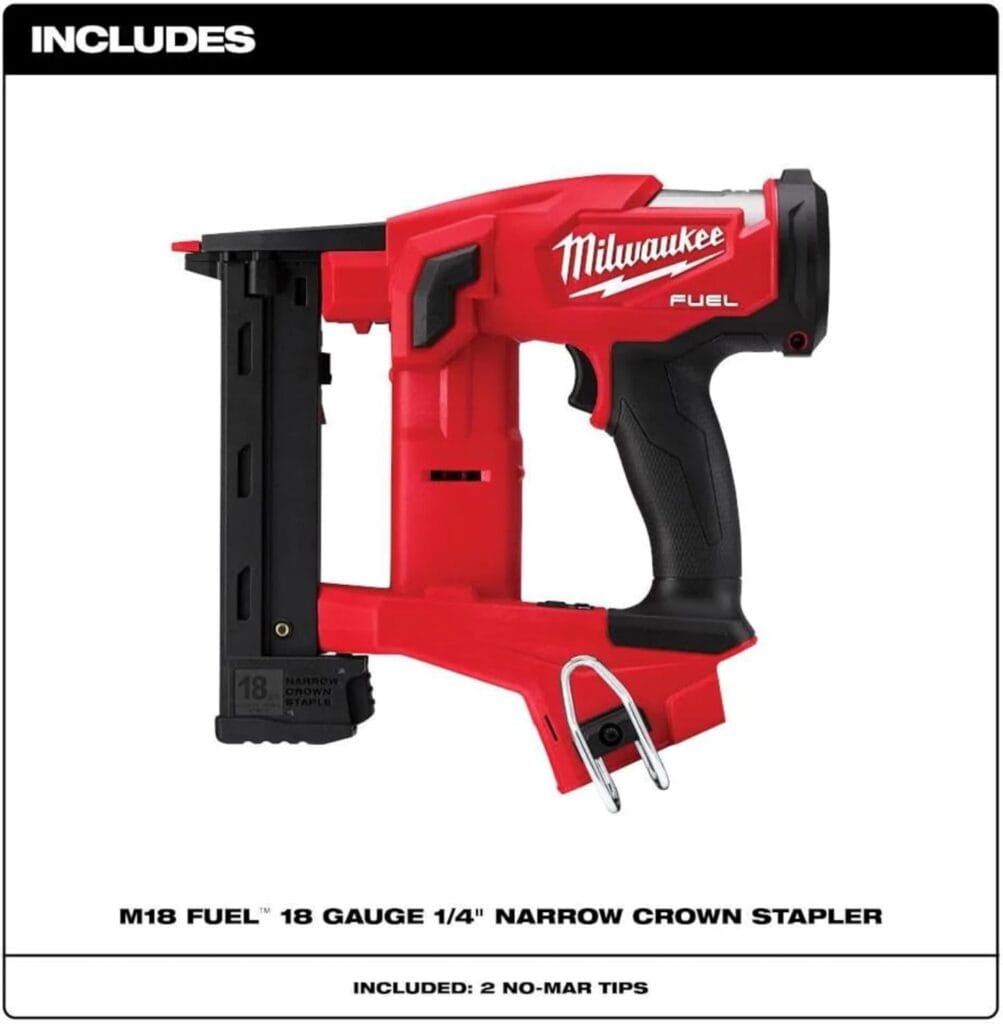
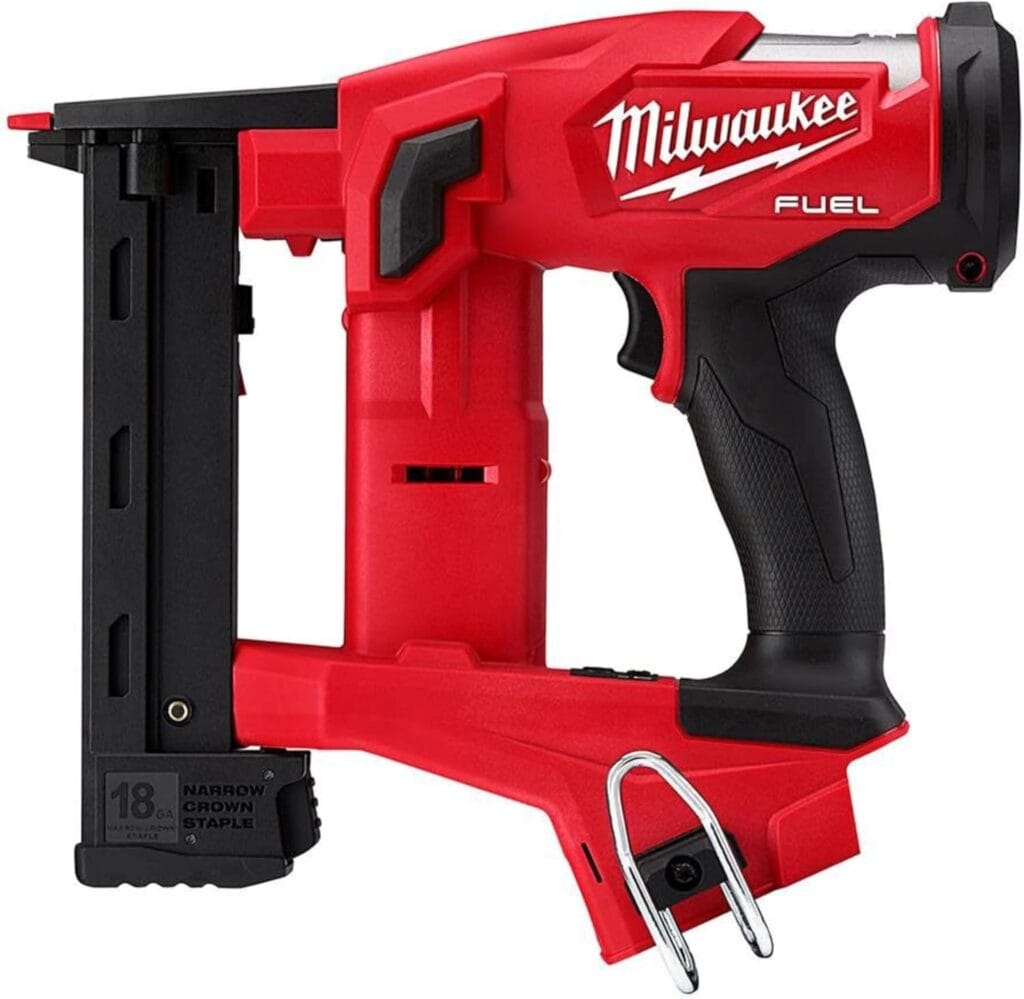
The 2749-20 is heavier than any of my pneumatic staplers—5.4 lbs bare. That’s worth acknowledging. After a long day of overhead work or repetitive cabinet assembly, you’ll notice it. That said, the grip is well-balanced and the tool never felt tippy or awkward. The reversible belt hook is a small thing but I used it constantly on the cabinet install.
The power and mode-select buttons are positioned naturally. Switching between sequential (precision placement) and contact (bump-fire speed) modes is a button press, not a screwdriver adjustment. That matters when you’re switching tasks mid-job.
Power and Depth Performance
This is where the Milwaukee earns its price. The nitrogen air spring delivers a snap that truly feels pneumatic—not just “almost pneumatic.” On 3/4″ hardwood maple, 1″ staples drove flush without blowing through. On 1/4″ plywood cabinet backs, I dialed the depth adjustment back and got clean, consistent results with no tear-out.
The tool-free depth adjuster is smooth and actually holds its setting between staples—something cheaper cordless staplers consistently fail at. Once I dialed in for a material, I didn’t have to re-adjust throughout the task.
Fire Rate and Battery Life
In bump-fire (contact) mode, I recorded right around 4–5 staples per second, which matches what other reviewers have found. More importantly, there is truly zero ramp-up time. You press the nose, pull the trigger, it fires. No hesitation. For production work like soffit installation or backing an entire run of cabinets, this makes a real difference in your day.
Battery life is exceptional. On a single 2Ah M18 pack, you’re looking at well over 2,000 staples. I ran an entire kitchen’s worth of cabinet backs plus a good chunk of face frame assembly on one battery. If you’re swapping two packs, you can work essentially all day without stopping.
Where It Falls Short
The weight is the only real complaint I have in day-to-day use. Compared to a 3.5–4 lb pneumatic stapler, the extra pound-plus adds up in extended overhead work. This isn’t a dealbreaker, but it’s an honest caveat. If you’re a hobbyist who installs a cabinet back once a month, the price-to-frequency equation is also harder to justify. This is a tool built for frequent, professional use—the economics make most sense if you’re doing this regularly.
Milwaukee 2749-20 vs. the Competition
| Feature | Milwaukee 2749-20 | DeWalt DCN681B | Ryobi PCL538B |
|---|---|---|---|
| Mechanism | Nitrogen air spring | Brushless motor | Brushless motor |
| Staple Range | 3/8″ – 1-1/2″ | 1/2″ – 1-1/2″ | 3/8″ – 1-1/2″ |
| Weight (bare) | 5.4 lbs | 5.7 lbs | ~4.9 lbs |
| Fire Rate | 4–5/sec | Moderate | Moderate |
| Ramp-Up Time | Zero | Slight | Slight |
| Battery Platform | M18 | 20V MAX | ONE+ |
| Price (bare) | ~$209–$279 | ~$249–$299 | ~$99–$129 |
| Best For | Pro / frequent use | DeWalt ecosystem users | Occasional DIY use |
The DeWalt DCN681B is the most natural comparison—similar price range, similar feature set, brushless motor. It’s a genuinely good stapler. But the Milwaukee’s nitrogen air spring mechanism gives it a noticeably faster, more responsive feel in contact-fire mode. If you’re already in the DeWalt 20V system, the DCN681B makes perfect sense and you won’t be disappointed. If you’re buying into a new platform or already own M18 tools, the Milwaukee pulls ahead.
The Ryobi PCL538B is a budget-friendly option for the occasional user who doesn’t need production-level fire rates. It works, and the ONE+ battery compatibility is a real advantage for homeowners already in that ecosystem. But for serious woodworking and cabinet work, the Milwaukee is a different class of tool.
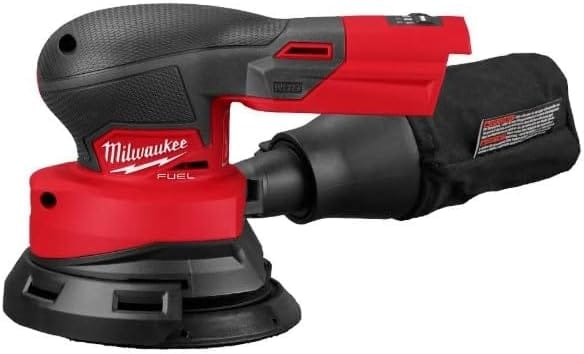
See also: Milwaukee M18 FUEL Random Orbital Sander — another great cordless M18 tool for woodworkers
Pros and Cons (Expanded)
Pros
Zero ramp-up time. The nitrogen air spring is the single biggest differentiator in this class. Press, fire, done. In contact mode you can work nearly as fast as a pneumatic—something motor-driven cordless staplers struggle to match.
Outstanding battery life. Over 2,000 staples per 2Ah pack is class-leading. If you’re on a job site doing repeated tasks, you’re not nursing the battery.
Reliable depth adjustment. Tool-free, smooth, and it holds. I’ve used cordless nailers where the depth adjustment drifts after a few hundred fasteners. This doesn’t.
Dual firing modes. Sequential is great for precision cabinet work where you’re placing staples deliberately. Contact mode is what you want for underlayment or soffit runs where speed matters more.
Universal staple compatibility. Accepts any 18GA 1/4″ narrow crown staple from 3/8″ to 1-1/2″, regardless of brand. I’ve been running Bostitch staples through it without issue.
Cons
Price. At $279 for a bare tool, this is a significant investment. It’s justified if you use it regularly, but for an occasional-use hobbyist, the calculus is harder.
Weight. 5.4 lbs is heavier than most pneumatic staplers. In overhead or extended-reach situations, you’ll feel it. Not a dealbreaker, but worth knowing before you buy.
Battery not included. The bare tool price means you need an M18 battery separately. If you’re not already in the ecosystem, factor in an extra $50–$100 for a starter battery and charger—or buy the 2749-21CT kit.
Final Verdict
Rating: 4.6 / 5
The Milwaukee M18 FUEL 18GA 1/4″ Narrow Crown Stapler is the best cordless narrow crown stapler available for serious woodworkers and professional carpenters. The nitrogen air spring mechanism delivers genuinely pneumatic-class responsiveness—not an approximation of it—and the battery life is impressive enough that I’ve stopped reaching for my compressor on cabinet work entirely.
If you already own M18 batteries, this is an easy recommendation. If you’re starting fresh or don’t do this type of work frequently, the Ryobi or DeWalt alternatives are worth a look. But for anyone who does regular cabinet builds, finish carpentry, or renovation work, the 2749-20 will pay for itself in convenience and time saved.
Who should buy it: Professional carpenters, serious woodworkers, remodelers who work frequently without easy compressor access.
Who should skip it: Hobbyists who staple cabinet backs once or twice a year. The Ryobi PCL538B will serve you just fine at less than half the price.
See also: The 5 Best Soft Close Cabinet Hinges — complete your cabinet build
FAQs About the Milwaukee M18 FUEL 18GA Narrow Crown Stapler
Is the Milwaukee 2749-20 worth the premium over the DeWalt DCN681B?
If you’re already in the M18 ecosystem, yes. The nitrogen air spring gives it a more pneumatic feel, with faster response and zero ramp-up time. If you’re in the DeWalt system, the DCN681B is a capable tool that you’ll be happy with—the difference is real but not dramatic enough to justify switching platforms.
What staples does the Milwaukee 2749-20 use?
It accepts any standard 18-gauge 1/4″ narrow crown staples from 3/8″ to 1-1/2″ in length. Brand doesn’t matter—Bostitch, Senco, Paslode, and generic hardware store staples all work fine in this magazine.
How many staples can I drive on a single battery charge?
Milwaukee rates it at over 2,000 staples on a single 2Ah M18 battery. In my real-world use, that tracks. On a 5Ah pack you can essentially work all day on a single charge. I’d still keep a spare battery on hand for heavy production days.
Can I use this for cabinet back installation?
Absolutely—that’s one of the best use cases for this tool. It drives 18GA staples cleanly into plywood backing material without blowing through, and the depth adjustment lets you dial in precisely for different sheet thicknesses. It’s become my go-to for this task.
Does it work for flooring underlayment?
Yes, and it’s excellent for it. Contact (bump-fire) mode lets you move quickly through large underlayment runs, and the consistent depth control means you’re not leaving staples proud that could telegraph through finished flooring.
Is the bare tool (2749-20) or the kit (2749-21CT) a better deal?
If you already own M18 batteries and a charger, the bare tool is the way to go. If you’re starting out in the M18 ecosystem, the kit (which includes a battery, charger, and bag) at around $399 is better value than buying the components separately.
See also: Top 3 Woodworking Safety Choices for Cabinet Building
Affiliate Disclosure: CraftySaw uses affiliate links. If you purchase through a link on this site, I may receive a referral commission at no extra cost to you. This helps support the site and keeps the reviews coming. I only recommend tools I have personally used and genuinely believe in.