An 18-gauge brad nailer earns its spot on every finish crew for one reason: baseboard, casing, crown, shoe molding, and cabinet trim all need a fastener that holds without splitting delicate stock or leaving a hole you have to fill twice. It’s the single most-used nail gun on a punch-out day. I haven’t run these three specific models myself, but I dug into what trim carpenters and independent testers consistently rate highest, and the picks below are the ones that show up again and again as the top choice in each category.
Quick Summary:
- Best Cordless: Milwaukee M18 FUEL 2746-20 — nitrogen air spring gives it genuinely pneumatic-feeling drive with zero ramp-up
- Best Pneumatic: Bostitch BTFP12233 — the decade-plus trim-carpenter classic, cheap enough that owning a compressor makes it a no-brainer
- Best for DeWalt Platform: DeWalt DCN680B — same-battery convenience if you’re already running 20V MAX tools
Cordless vs. Pneumatic: What Actually Matters
The old argument against cordless brad nailers was power — early cordless units had a noticeable ramp-up lag and struggled in hardwood. That gap has closed. Both Milwaukee and DeWalt now use a mechanism (nitrogen air spring for Milwaukee, brushless motor driving a flywheel-style mechanism for DeWalt) that fires instantly with no delay, and both sink brads into hardwood trim as reliably as a compressor setup.
What hasn’t changed: pneumatic is still cheaper per tool, lighter in your hand since there’s no battery hanging off the back, and if you already run a compressor for other tools, adding a $100 pneumatic brad nailer is a much easier buy than a $300+ cordless one. The tradeoff is dragging a hose around, which is a real hassle on stairs, in finished rooms, or bouncing between floors.
Best Cordless: Milwaukee M18 FUEL 2746-20
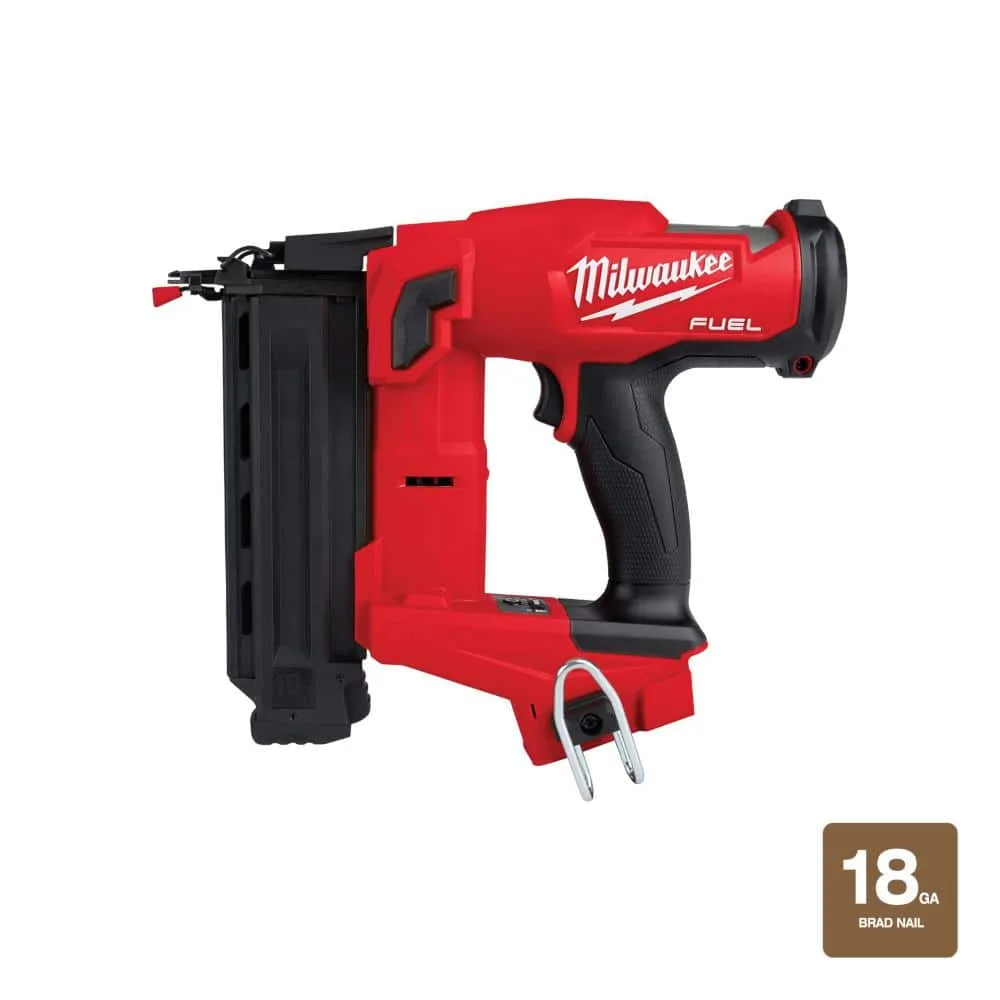
This is the nailer that comes up first, unprompted, in nearly every trim-carpenter forum thread and hands-on review roundup I looked at. The nitrogen air spring mechanism means there’s no waiting for the motor to spin up before it fires — pull the trigger, the nail’s in. On crown molding runs where you’re bump-firing quickly along a wall, that zero ramp-up time is the difference professionals consistently point to between a smooth pace and a stuttery one.
At 5.3 lbs tool-only it’s light enough for overhead work without wearing out your shoulder, and the 110-nail magazine means fewer reloads mid-run. It runs on the same M18 batteries as every other Milwaukee tool in your bag, so if you’re already on the platform, this costs you nothing extra in battery investment.
Specs: 18ga, 5/8″–2-1/8″ nails, 110-nail magazine, 5.3 lbs tool-only, sequential and contact firing modes, tool-free depth adjustment and jam clearing.
Best Pneumatic: Bostitch BTFP12233
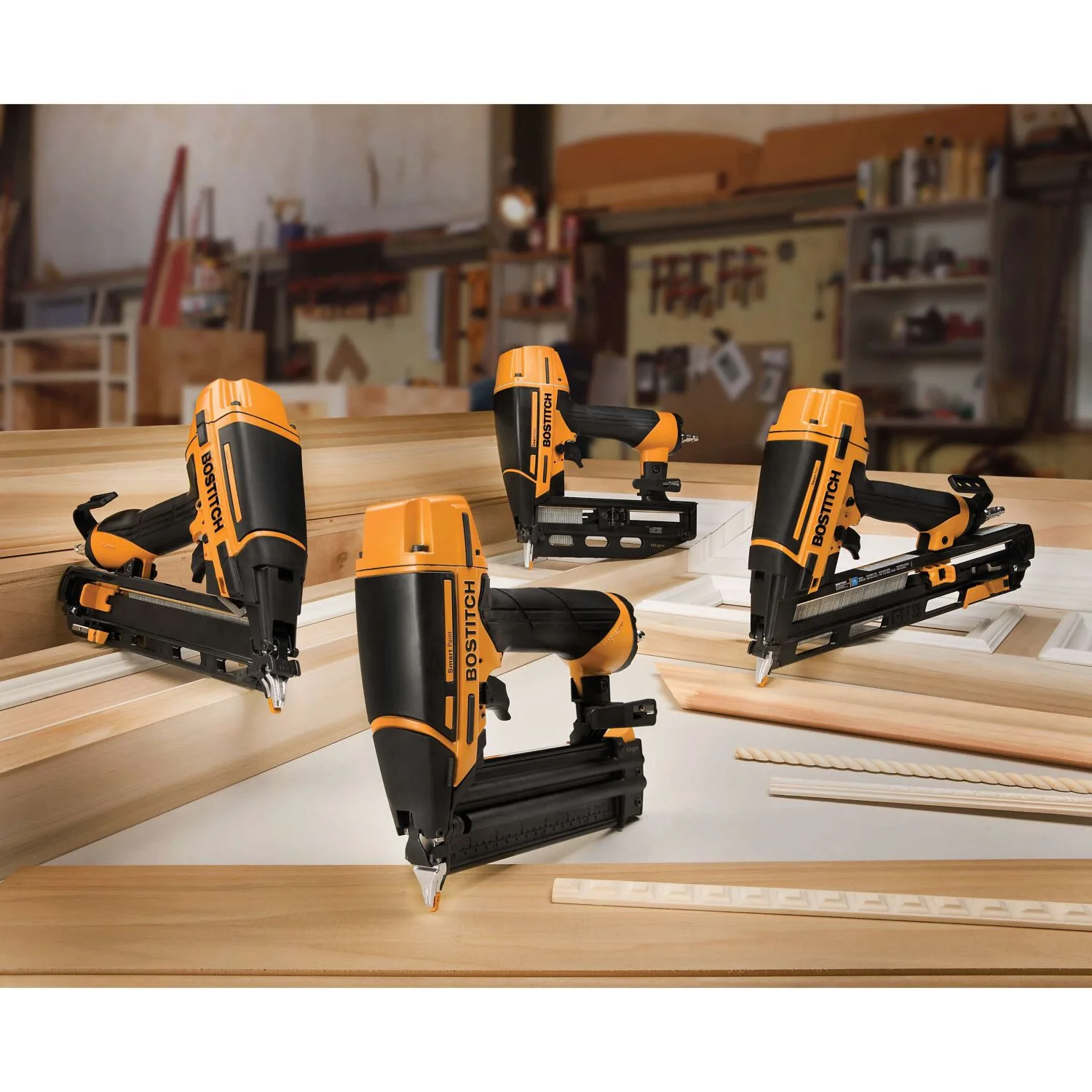
This one’s been on trim crews for over a decade, and it’s still the nailer guys recommend to each other on job sites and forums without hesitation. The Smart Point nose is 80% smaller than Bostitch’s older nailers, which means you can actually see where the nail is going to land instead of guessing — reviewers who’ve used both consistently say that matters more than you’d expect until you’ve fought a wide nose in a tight corner.
At 3.1 lbs, it’s noticeably lighter in the hand than either cordless option, since there’s no battery weight. It’s also just cheap — if you’re already running a compressor for framing, roofing, or flooring work, adding this to the truck is a minor expense. The 7-year warranty is longer than most pneumatic nailers offer in this price range.
Specs: 18ga, 5/8″–2-1/8″ nails, 100-nail magazine, 3.1 lbs, 70–120 PSI operating range, dial-a-depth control, tool-free jam release, 7-year warranty.
If You’re On DeWalt: DCN680B
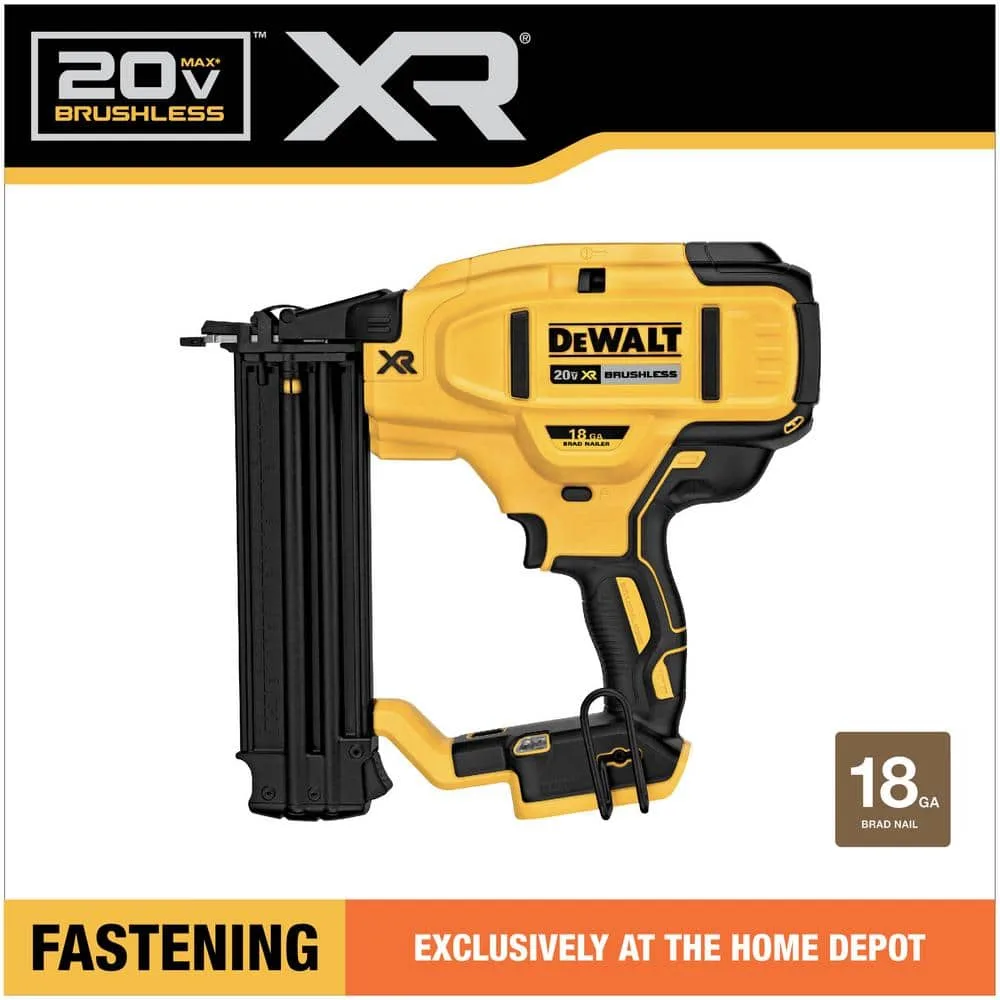
If you’re already deep into the DeWalt 20V MAX platform from our DeWalt vs. Milwaukee comparison, this is the brad nailer that keeps you on one battery system. It drives the same 5/8″–2-1/8″ range of brads, has a micro nose for line-of-sight accuracy, and a tool-free stall release if the driver ever binds mid-fire.
It’s heavier than the Milwaukee at 6.15 lbs tool-only, and a few users report the ramp-up feeling a touch slower on rapid bump-fire sequences. It’s still a capable, reliable nailer — the deciding factor here is almost entirely which battery platform is already sitting in your truck.
Specs: 18ga, 5/8″–2-1/8″ nails, 6.15 lbs tool-only, brushless motor, tool-free depth adjustment and jam release, compatible with 20V MAX and 60V FLEXVOLT batteries.
Spec Comparison
| Spec | Milwaukee 2746-20 | Bostitch BTFP12233 | DeWalt DCN680B |
|---|---|---|---|
| Power Source | Cordless (M18) | Pneumatic | Cordless (20V MAX) |
| Nail Range | 5/8″–2-1/8″ | 5/8″–2-1/8″ | 5/8″–2-1/8″ |
| Magazine Capacity | 110 nails | 100 nails | Not specified |
| Weight (tool only) | 5.3 lbs | 3.1 lbs | 6.15 lbs |
| Ramp-Up Time | None (nitrogen air spring) | None (air-powered) | Minimal (brushless) |
| Battery/Air Required | M18 battery | Air compressor | 20V MAX or FLEXVOLT battery |
Final Verdict
All three are consistently rated among the top choices in their category by trim carpenters and independent reviewers. Based on the research, the right pick comes down to your setup, not raw capability.
If you don’t already own a compressor and want the freedom of cordless, get the Milwaukee M18 FUEL 2746-20 — it’s the closest thing to pneumatic performance without the hose. If you already run air for other tools, the Bostitch BTFP12233 is a cheap, proven classic that’s been on job sites for years. And if you’re already invested in DeWalt batteries, the DCN680B keeps you on one platform without giving up much capability.
FAQs About 18-Gauge Brad Nailers
Q: What’s the difference between a brad nailer and a finish nailer? A: Gauge and hole size. 18-gauge brad nails are thinner and leave a smaller hole, ideal for delicate trim like shoe molding and cabinet work. 15- or 16-gauge finish nailers drive thicker nails with more holding power, better for thicker baseboard or crown.
Q: Is cordless actually as powerful as pneumatic now? A: For 18-gauge brad work, yes. Both Milwaukee and DeWalt’s current cordless brad nailers sink brads into hardwood trim consistently, matching pneumatic performance. The gap that used to exist has closed for this category.
Q: Do I need an 18-gauge or a 16-gauge nailer for baseboard? A: For standard 3/4″ MDF or pine baseboard, 18-gauge is fine. For thicker baseboard profiles (over 3/4″), a 16-gauge finish nailer holds better.
Q: Can these nailers use any brand of 18-gauge brad nail? A: Generally yes, as long as the nails match the length and gauge spec. That said, sticking with the manufacturer’s recommended fasteners avoids jams and keeps warranty coverage intact.
Q: Is the Bostitch really as good as the cordless options for a full-time trim carpenter? A: If you already run a compressor, yes — many trim carpenters still prefer pneumatic for the lighter weight and lower per-tool cost. The main downside is hose management on stairs and in finished spaces.
Affiliate Disclaimer: Just want to be upfront with you – some links in this review are affiliate links, so if you make a purchase through them, we may earn a small commission at no extra cost to you. This helps us keep our site running and allows us to continue bringing you honest, detailed tool reviews. Your support means the world to us! Thank you.