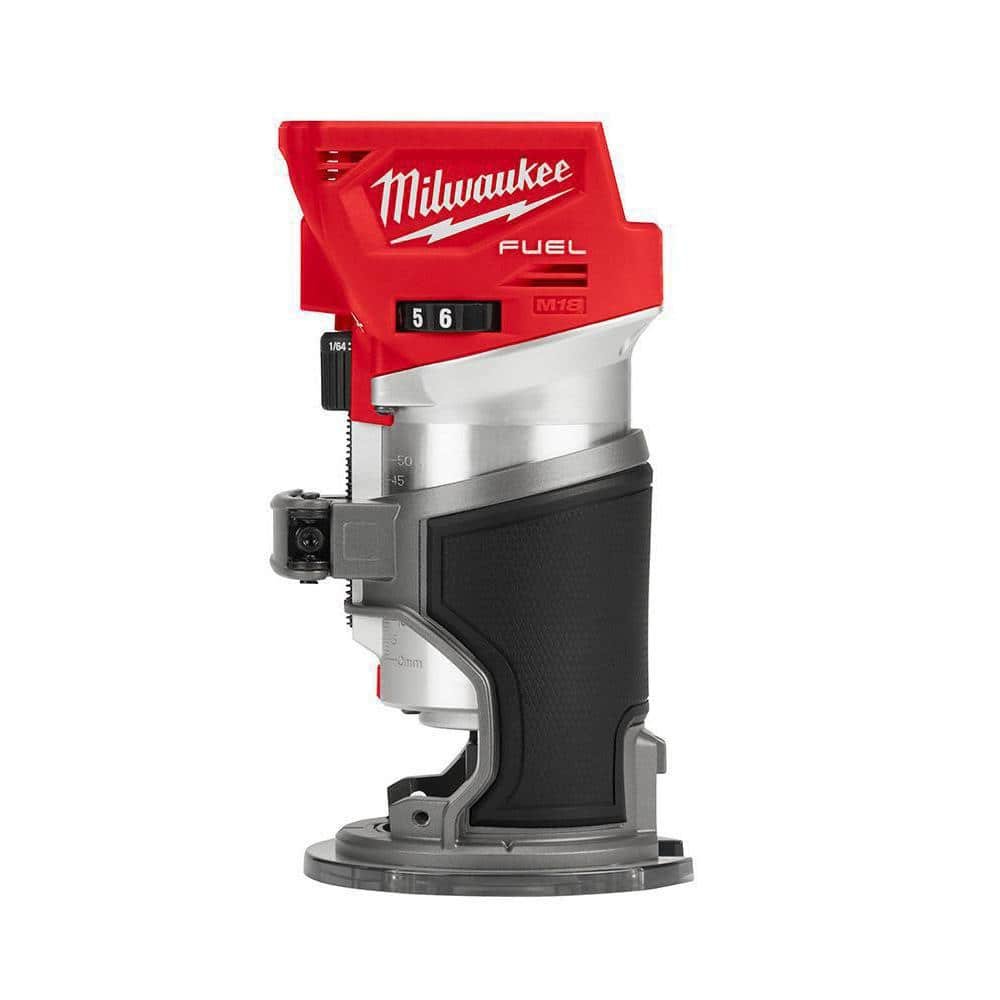
A compact router doesn’t get the attention that a table saw or a miter saw does, but on trim work, cabinet edge profiles, and mortising hinges, it’s the tool that comes out of the bag the most. A full-size plunge router is overkill for these jobs, and a hand plane is too slow. Milwaukee and DeWalt both make a cordless compact router worth owning, and I’ve run both on real cabinet and finish carpentry work — they land in different places depending on what platform you’re already invested in.
Quick Summary:
- Best Overall Power: Milwaukee M18 FUEL 2723-20 — 31,000 RPM, corded-equivalent 1.25 HP, widest speed range
- Best Value: DeWalt DCW600B — meaningfully cheaper as a bare tool, and a no-brainer if you’re already on the 20V MAX platform
- Both are tool-only — neither includes a battery or charger, so factor that into your total cost if you’re starting from zero on either platform
Why a Compact Router Belongs in Your Kit
A palm or compact router isn’t a replacement for a full-size plunge router — it’s a different tool for a different job. I reach for mine on edge profiles, mortising door hinges and lock plates, trimming laminate and veneer flush, and small dado or rabbet cuts where a big router is clumsy and slow to set up. On a finish carpentry job, this is the tool that comes out of the bag more often than the big one.
Milwaukee M18 FUEL 2723-20 — Pros:
- 31,000 RPM max — the fastest in this class, and it shows in cut quality on hardwoods
- Wider variable speed range (10,000–31,000 RPM) for better control on soft or delicate materials
- Comes with a 4″ round sub-base, a 5-3/4″ template sub-base, dust shroud, and a straight edge guide included
- Compatible with Milwaukee’s plunge base and offset base attachments (sold separately) if you want to expand later
- 5-year warranty
Milwaukee M18 FUEL 2723-20 — Cons:
- Noticeably more expensive as a bare tool than the DeWalt
- Overkill if you’re only doing light trim work occasionally
- Sold exclusively through Home Depot in the US
DeWalt DCW600B — Pros:
- Significantly cheaper as a bare tool — the clear budget pick in this category
- brushless motor with a depth adjustment ring that’s fast and precise
- D-shaped sub-base adds stability for edge profiling and radius work
- Compatible with the DNP612 plunge base (sold separately) for the same expandability as Milwaukee
- If you already run 20V MAX tools, this is a same-battery, no-brainer add to the bag
DeWalt DCW600B — Cons:
- Lower top speed (25,500 RPM) than the Milwaukee, and a narrower speed range
- 3-year warranty vs. Milwaukee’s 5
- Fixed base only in this tool-only listing — no sub-base or edge guide included
Spec Comparison
| Spec | Milwaukee M18 FUEL 2723-20 | DeWalt DCW600B |
|---|---|---|
| Motor | POWERSTATE Brushless | Brushless |
| Power (corded-equivalent) | 1.25 HP | Not officially rated in HP |
| Speed Range | 10,000–31,000 RPM | 16,000–25,500 RPM |
| Collet | 1/4″ | 1/4″ |
| Base Included | Fixed base + 4″ round & 5-3/4″ template sub-bases | Fixed base, D-shaped sub-base |
| Plunge Base Option | Sold separately | DNP612, sold separately |
| Included Accessories | Dust shroud, straight edge guide, collet/spindle wrenches | Wrench, instruction manual |
| Warranty | 5 years | 3 years |
| Battery/Charger Included | No (tool only) | No (tool only) |
My Hands-On Take
Where the Milwaukee wins: Speed and control. That 31,000 RPM top end and the wider variable range mean cleaner cuts in hard maple and oak, and enough headroom to slow way down for softer material without burning the edge. The included template sub-base and straight edge guide also mean you’re ready for more precise work right out of the box — no separate accessory purchases needed to get started on inlay or template work.
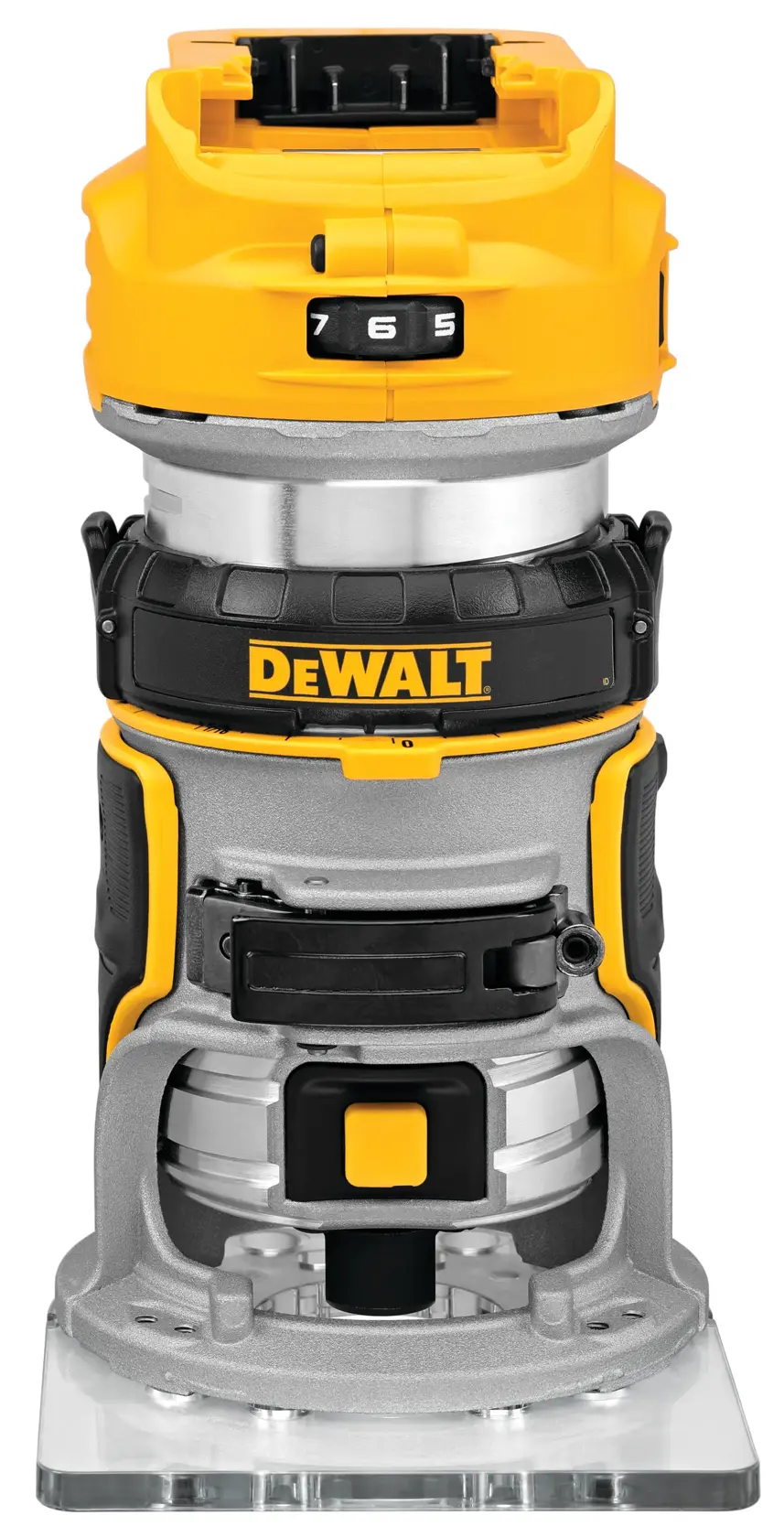
Where the DeWalt wins: Price, plain and simple — and this is where the real story is. As bare tools, the DeWalt runs meaningfully cheaper than the Milwaukee. Neither one includes a battery or charger, so that gap is a straight comparison of the tools themselves, not an apples-to-oranges kit-versus-bare-tool situation. If you’re already running 20V MAX batteries in your drill and impact driver, adding this router costs you nothing extra in the “buy into a new battery ecosystem” sense — you drop a battery in and go. That’s real value if DeWalt is already your platform.
The depth adjustment ring on the DeWalt is genuinely good — smoother and more predictable than the Milwaukee’s micro/macro adjust combo for quick height changes mid-project. Where it gives ground is top speed and warranty length. For most trim and cabinet work, 25,500 RPM is plenty, and you likely won’t notice the difference unless you’re routing dense hardwoods all day.
Final Verdict
Our Rating: ★★★★½ — Both are solid, well-built compact routers. The right pick comes down to your platform and your budget, not raw capability.
If you’re already invested in DeWalt 20V MAX batteries, get the DCW600B. The price gap is real, the depth adjustment is excellent, and you won’t be reaching for the extra RPM on 90% of trim and cabinet work.
If you’re on Milwaukee M18, doing detailed template or inlay work, or you just want the most capable compact router regardless of price, get the 2723-20. The extra speed range and included accessories make it the better all-around tool if cost isn’t the deciding factor.
FAQs About Cordless Compact Routers
Q: Do I need a plunge base to use either of these routers? A: No. Both come with a fixed base, which covers most edge profiling, trimming, and mortising work. A plunge base (sold separately for both platforms) is worth adding later if you start doing stopped dados or mortises that need to start mid-board.
Q: Is a compact router powerful enough to replace a full-size router? A: For most trim, cabinet, and finish carpentry work, yes. Where it falls short is heavy stock removal and large-diameter bits — that’s still a job for a full-size plunge router.
Q: Why is the price difference between these two so large for tools that look similar? A: Motor speed range and included accessories are the biggest factors. The Milwaukee’s wider RPM range and included template sub-base, dust shroud, and edge guide add real cost. If you don’t need those extras, the DeWalt gets you a capable router for meaningfully less.
Q: Can I use a battery from my drill in either of these routers? A: Yes — both are tool-only and use their respective platform’s standard batteries (M18 for Milwaukee, 20V MAX for DeWalt). Any battery from your existing kit works.
Q: What size bits do these routers accept? A: Both use a 1/4″ collet, which covers the vast majority of trim router bits. Neither accepts 1/2″ shank bits — that’s a full-size router’s job.
Affiliate Disclaimer: Just want to be upfront with you – some links in this review are affiliate links, so if you make a purchase through them, we may earn a small commission at no extra cost to you. This helps us keep our site running and allows us to continue bringing you honest, detailed tool reviews. Your support means the world to us! Thank you.